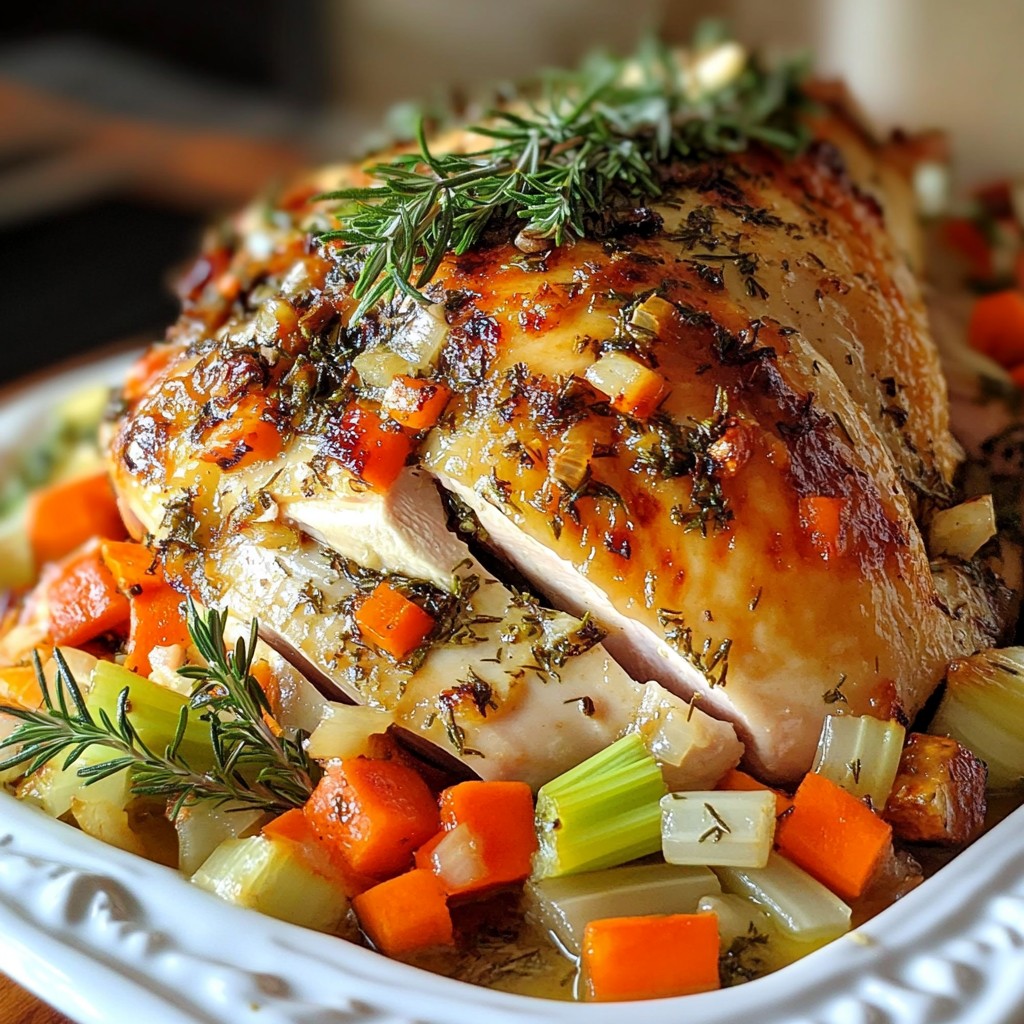
Ready to wow your family with a show-stopping turkey? This Garlic Herb Butter Roasted Turkey recipe elevates the classic dish to a whole new level. With rich herb flavors and a crispy, golden skin, it’s sure to be the star of your dinner table. I’ll guide you through each step, share tips for juicy meat, and even explore mouth-watering variations. Let’s dive in and get cooking!
Why I Love This Recipe
- Flavorful Herb Butter: The combination of garlic and fresh herbs creates a savory and aromatic butter that infuses the turkey with incredible flavor.
- Moist and Juicy: Stuffing the turkey with vegetables and using broth during roasting ensures that the meat remains moist, making every bite succulent.
- Beautiful Presentation: Carving the turkey and garnishing with fresh herbs creates an eye-catching centerpiece for any holiday table.
- Family Tradition: This recipe has become a beloved tradition in my family, bringing everyone together for a memorable meal.
Ingredients
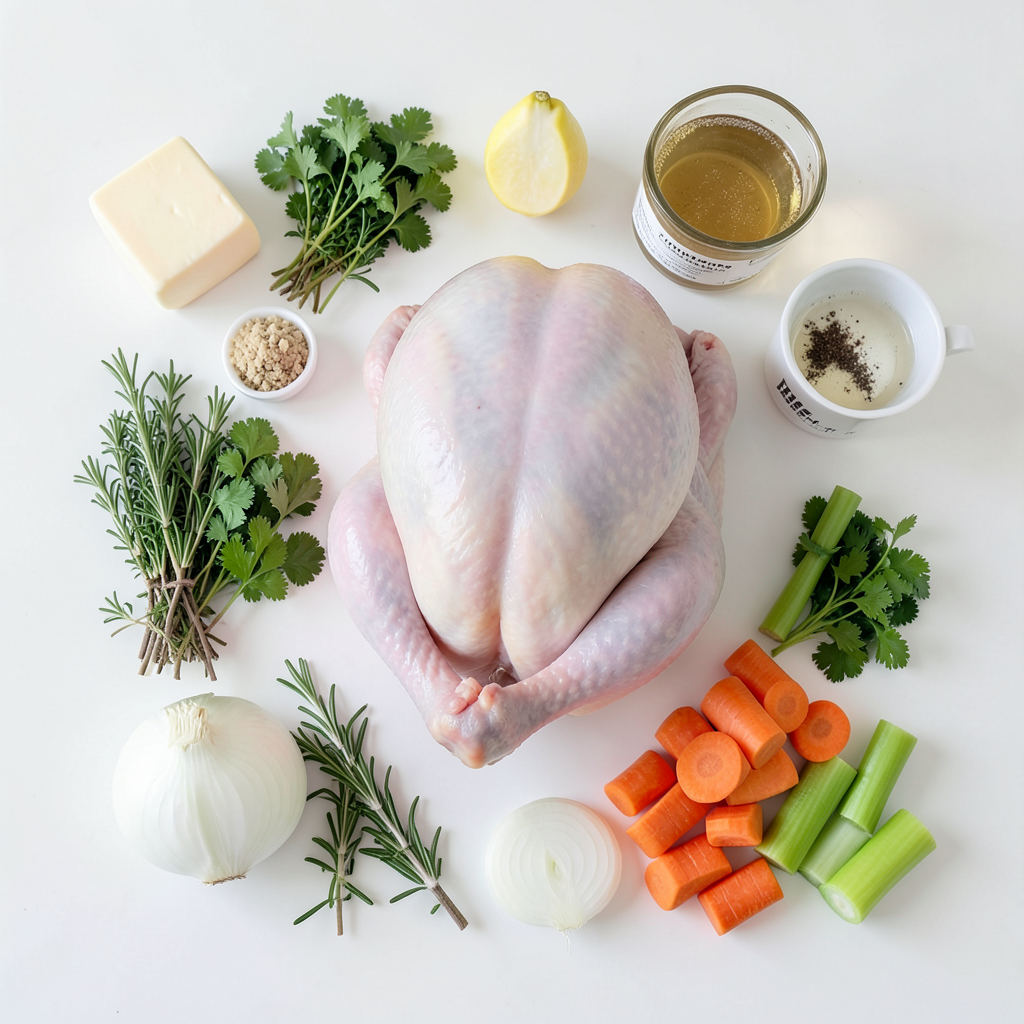
Main Ingredients for Garlic Herb Butter Roasted Turkey
- 1 whole turkey (12-14 lbs), thoroughly thawed
- 1 cup unsalted butter, softened to room temperature
- 8 cloves of garlic, finely minced
- 2 tablespoons fresh rosemary, finely chopped
- 2 tablespoons fresh thyme, finely chopped
- 2 tablespoons fresh parsley, finely chopped
- Zest and juice of 1 lemon
- Salt and freshly ground black pepper, to taste
Additional Ingredients for Flavor and Moisture
- 4 cups low-sodium chicken broth
- 1 onion, quartered
- 2 carrots, peeled and chopped
- 2 celery stalks, chopped
Tips for Selecting the Perfect Turkey
When choosing a turkey, size matters. A 12-14 pound turkey suits most gatherings. Look for a bird with firm, pink skin and no bruises. Fresh turkeys are best, but frozen ones work well too. Always check the sell-by date. If buying frozen, ensure it's fully thawed before cooking. A quality turkey ensures great flavor in your Garlic Herb Butter Roasted Turkey.
Step-by-Step Instructions
Preheat the Oven and Prepare the Herb Butter
Start by heating your oven to 325°F (165°C). This helps cook the turkey evenly. Next, mix up your herb butter. In a bowl, combine 1 cup of softened unsalted butter with 8 minced garlic cloves, 2 tablespoons of chopped rosemary, thyme, and parsley. Add the zest and juice of one lemon. Don’t forget to season with salt and black pepper. Stir until it's all smooth and well blended.
Preparing the Turkey for Roasting
Now it’s time to get your turkey ready. First, take out any giblets from the turkey’s cavity. Use paper towels to pat the turkey dry. This step is key for a crispy skin. Season both the inside and outside of the turkey with salt and pepper. Make sure it’s well covered for great taste.
Roasting the Turkey: Times and Techniques
- External Butter Coating: Carefully lift the skin from the turkey breast. Use your fingers, but be gentle. Spread half of your herb butter underneath the skin. This helps keep the turkey juicy. Rub the rest of the butter all over the outside of the turkey. A good coat makes for a tasty skin.
- Internal Stuffing with Vegetables: Stuff the turkey cavity with quartered onion, chopped carrots, and celery. These veggies add moisture and flavor while cooking.
Set the turkey on a rack in a large roasting pan. Pour 4 cups of low-sodium chicken broth into the pan. This keeps the turkey moist and helps with making gravy.
To roast, cover the turkey loosely with aluminum foil. Cook for about 13 minutes per pound. For a 12-14 pound turkey, this will take around 2.5 to 3 hours. In the last 45 minutes, remove the foil to crisp up the skin.
Check the turkey’s doneness with a meat thermometer. Insert it into the thickest part of the thigh. It should read at least 165°F (75°C).
After cooking, carefully take the turkey out of the oven. Let it rest for at least 30 minutes before carving. Resting ensures the juices stay inside, making every bite juicy.
Tips & Tricks
How to Keep Your Turkey Juicy
To keep your turkey juicy, start by using high-quality butter. I recommend unsalted butter for better control over salt levels. Apply herb butter under the skin. This keeps moisture in while adding flavor. Also, stuff the turkey with vegetables. Onions, carrots, and celery help retain moisture. Use low-sodium chicken broth in the roasting pan. This creates steam while the turkey cooks, which aids in juiciness. Finally, let your turkey rest after cooking. This allows the juices to spread evenly throughout the meat.
Best Methods for Carving Turkey
When carving turkey, use a sharp knife for clean cuts. Start with the legs. Pull the leg away from the body and cut at the joint. Next, carve the breast meat. Make long, even slices. Slice against the grain for tender pieces. Always cut a small bit on the top. This helps you see where to slice. Serve the dark meat and white meat together. This keeps flavors mixed and guests happy.
Enhancing Flavor with Additional Herbs
You can boost flavor by adding more herbs. Consider sage, tarragon, or dill. Mix them into your herb butter for extra taste. Fresh herbs work best, but dried herbs can also add depth. Try adding a few sprigs of rosemary inside the cavity. This infuses the meat with a lovely aroma. Don't forget citrus! Lemon zest brightens the flavors and balances the richness of the butter. A splash of orange juice can add a delightful twist.
Pro Tips
- Resting is Key: Allow your turkey to rest for at least 30 minutes after roasting. This helps the juices redistribute, ensuring a moist and flavorful bird.
- Use a Meat Thermometer: To ensure your turkey is perfectly cooked, check the internal temperature with a meat thermometer. It should reach 165°F (75°C) in the thickest part of the thigh.
- Flavor Boost: For an extra flavor kick, consider brining your turkey a day before roasting. This will enhance moisture and add depth to the taste.
- Keep It Covered: Cover the turkey with aluminum foil for the first part of roasting to prevent the skin from burning, then uncover it during the last 45 minutes for a crispy finish.
Variations
Herb Butter Roasted Turkey with Citrus Twist
You can add a bright twist to the classic dish. Use orange or lime zest along with lemon. Mix these zests into the herb butter. This change brings a fresh flavor to your turkey. It makes the meat taste lively. You can also add a splash of citrus juice. Use it on the turkey during roasting. This juicy addition will enhance the overall taste.
Stuffed Turkey Variations
Stuffing the turkey is a great way to add flavor. You can use different ingredients for stuffing. Consider using bread, wild rice, or quinoa. Add fruits like apples or cranberries for sweetness. Nuts such as walnuts or pecans offer a nice crunch. Fresh herbs can also boost flavor in the stuffing. Keep in mind that stuffed turkeys may take longer to cook. Always check the internal temperature to ensure safety.
Alternative Cooking Methods: Smoked or Fried
If you want a different cooking method, try smoking or frying. Smoked turkey has a rich, smoky flavor. Use wood chips like apple or hickory for the best taste. The smoking process adds a unique depth to the meat. Fried turkey is another tasty option. It cooks quickly and gives a crispy skin. Ensure the oil is hot enough for frying. This method also keeps the meat juicy. Both methods are fun and delicious ways to enjoy turkey.
Storage Info
How to Properly Store Leftover Turkey
To keep leftover turkey fresh, first let it cool down. Slice or chop the turkey into smaller pieces. Place the turkey in airtight containers or wrap it tightly in plastic wrap. Store it in the fridge for up to four days. If you want it to last longer, consider freezing it.
Best Ways to Reheat Turkey for Maximum Flavor
To reheat turkey without drying it out, try using the oven. Preheat it to 325°F (165°C). Place the turkey in a baking dish. Add a splash of chicken broth to keep it moist. Cover the dish with foil to trap steam. Heat for about 20 minutes or until warmed through. For crisp skin, uncover during the last few minutes.
Freezing Turkey for Later Enjoyment
Freezing turkey is easy and helps reduce waste. Wrap the turkey tightly in freezer-safe bags or foil. Label it with the date. You can freeze it for up to six months. When you’re ready to eat it, thaw the turkey in the fridge overnight before reheating. This keeps it tasty and safe.
FAQs
How long to cook a turkey for perfect results?
To cook a turkey, plan for about 13 minutes per pound. For a 12-14 pound turkey, it will take about 2.5 to 3 hours. Always check the time after the first two hours. This helps ensure the turkey cooks evenly.
What should the internal temperature of the turkey be?
The turkey should reach an internal temperature of at least 165°F (75°C). You can check this by inserting a meat thermometer into the thickest part of the thigh. This ensures the turkey is safe to eat and perfectly cooked.
Can I use frozen turkey for this recipe?
Yes, you can use a frozen turkey. However, it must be fully thawed before cooking. Thawing can take a few days in the fridge. For best results, plan ahead to ensure even cooking and great flavor.
How do I keep turkey skin crispy while baking?
To keep the skin crispy, apply the herb butter mixture all over the turkey. Loosely cover it with foil for most of the cooking time. Remove the foil for the last 45 minutes to help the skin get golden and crisp.
To recap, roasting a turkey with garlic herb butter makes your meal tasty and moist. You learned about key ingredients, cooking steps, and storing leftovers. Keeping your turkey juicy and flavorful can be easy with simple tips. Try different herb blends or cooking methods for fun variations. Remember, the perfect turkey is all about care and the right techniques. Enjoy your next feast with confidence; your turkey will impress everyone!