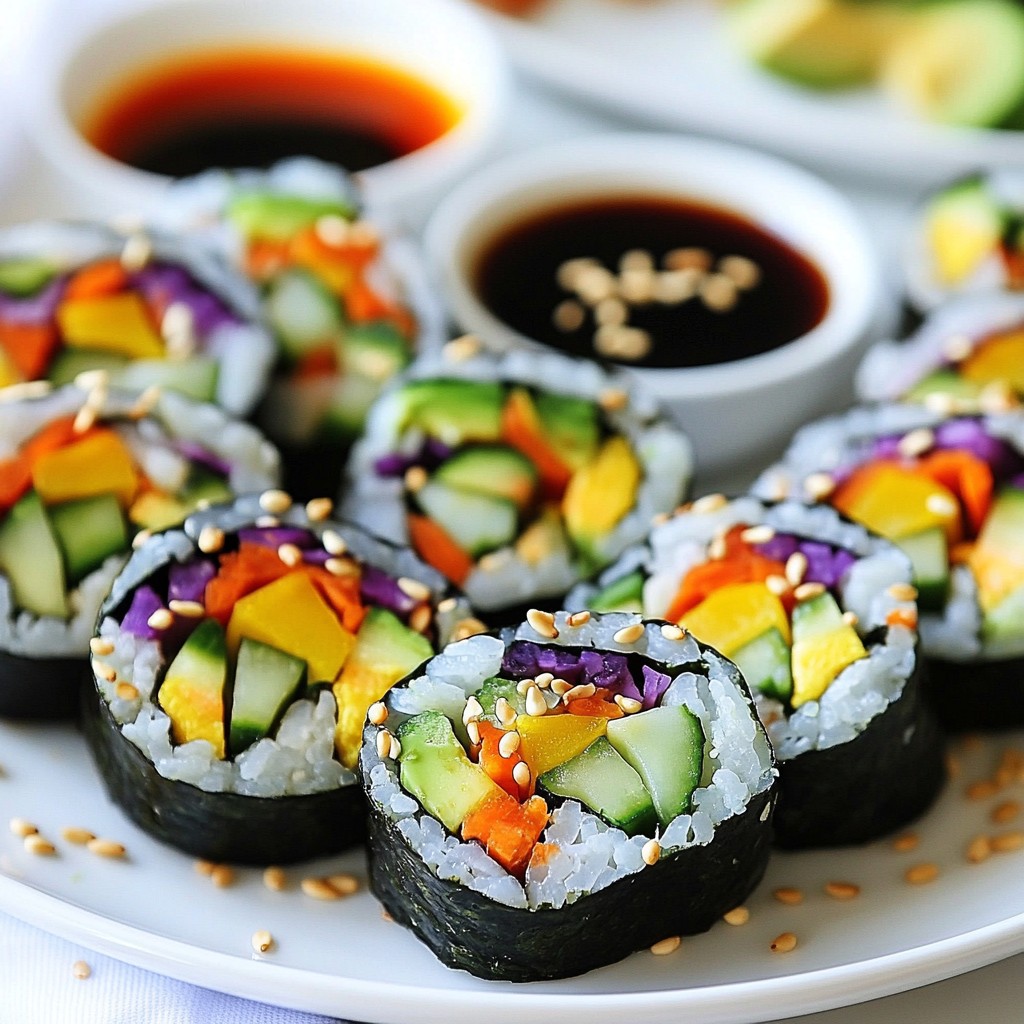
Are you ready to add a splash of color to your meals? Rainbow Veggie Sushi Rolls are not only vibrant but also packed with nutrients. You'll learn to roll these tasty treats in just a few easy steps. From fresh ingredients to fun dipping sauces, I’m here to guide you. Get ready to impress yourself and your friends with this healthy and delicious dish! Let’s dive in!
Why I Love This Recipe
- Vibrant Colors: These sushi rolls are not only delicious but also visually stunning with their array of colorful vegetables, making them a feast for the eyes.
- Healthy Ingredients: Packed with fresh vegetables and healthy fats from avocado, these rolls are a nutritious choice for any meal.
- Fun to Make: Rolling sushi is a fun and interactive activity that you can enjoy with family or friends, making for a memorable cooking experience.
- Customizable: You can easily adapt the fillings to your personal taste or dietary preferences, ensuring that everyone can enjoy their own unique roll.
Ingredients
Main Ingredients for Rainbow Veggie Sushi Rolls
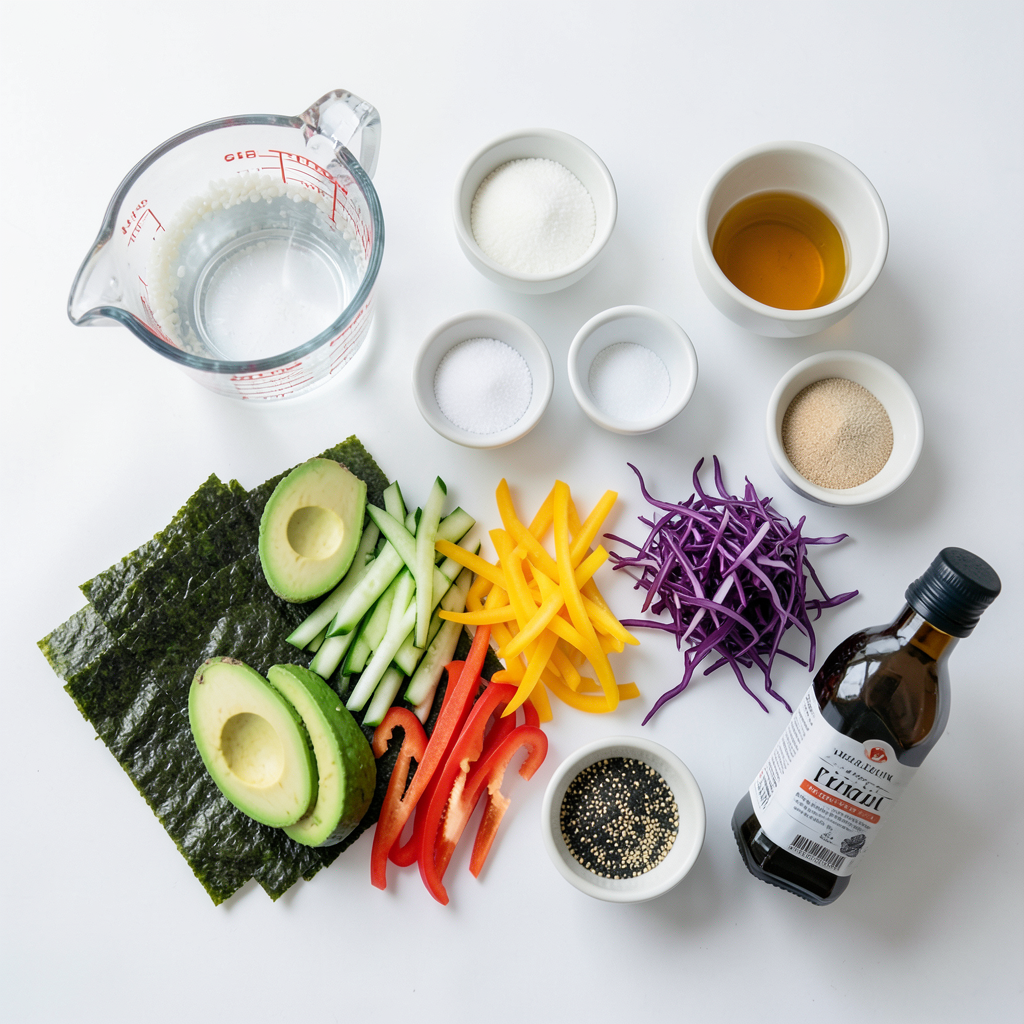
To make Rainbow Veggie Sushi Rolls, you need these main ingredients:
- 2 cups sushi rice
- 2 ½ cups water
- ¼ cup rice vinegar
- 2 tablespoons sugar
- 1 teaspoon salt
- 4 sheets Nori (seaweed)
- 1 ripe avocado, sliced into thin strips
- 1 cucumber, julienned
- 1 large carrot, grated or julienned
- ½ red bell pepper, thinly sliced
- ½ yellow bell pepper, thinly sliced
- ½ cup purple cabbage, finely shredded
- Toasted sesame seeds for garnish
These ingredients create a colorful and tasty sushi roll. Each veggie adds crunch and flavor. The sushi rice serves as a soft base for all the fresh toppings.
Optional Add-ins for Enhanced Flavor
You may want to add some extra flavors to your sushi rolls. Here are some great options:
- Cream cheese for a rich texture
- Fresh herbs like cilantro or mint for freshness
- Pickled ginger for tanginess
- Sesame seeds for a nutty taste
- Spicy mayo for a kick
These add-ins can take your sushi to the next level. Feel free to mix and match based on your taste.
Recommended Dipping Sauces
Dipping sauces enhance the sushi experience. Here are some tasty choices:
- Soy sauce for a classic flavor
- Wasabi for a spicy kick
- Sweet chili sauce for a hint of sweetness
- Ponzu sauce for a citrusy touch
Each sauce adds a new layer of flavor. Try different ones to discover your favorite!
Step-by-Step Instructions
Preparing the Sushi Rice
Rinsing and Cooking the Rice First, rinse 2 cups of sushi rice under cold water. Use a fine-mesh strainer for this task. Keep rinsing until the water runs clear. This step removes excess starch. After rinsing, drain the rice well. In a medium pot, combine the rinsed rice with 2 ½ cups of water. Bring the mixture to a gentle boil over medium heat. Once boiling, lower the heat to low. Cover the pot and let it simmer for 18-20 minutes. The rice should be tender and absorb all the water.
Seasoning the Rice While the rice cooks, make the seasoning. In a small bowl, mix ¼ cup of rice vinegar, 2 tablespoons of sugar, and 1 teaspoon of salt. Stir until the sugar and salt dissolve. Once the rice finishes cooking, transfer it to a large mixing bowl. Gently fold in the vinegar mixture using a wooden spoon. Allow the seasoned rice to cool to room temperature.
Assembling the Sushi Rolls
Laying Out Ingredients Now it’s time to assemble your rolls. Lay a bamboo sushi mat on a clean, flat surface. Place one sheet of nori on top, shiny side facing down. Wet your hands to prevent the rice from sticking. Take a handful of sushi rice and spread it evenly over the nori. Leave about a 1-inch border at the top.
Rolling Techniques Next, arrange your choice of fillings at the bottom edge of the rice-covered nori. Use strips of avocado, cucumber, grated carrot, bell pepper slices, and purple cabbage. Carefully lift the bamboo mat from the bottom. Start rolling the sushi away from you, applying gentle pressure. Roll until you reach the exposed edge of the nori. To seal the roll, dampen the edge of the nori with water and press it down.
Cutting and Serving the Rolls
Tips for Clean Cuts Once your rolls are complete, it’s time to cut them. Use a sharp knife for this task. To achieve clean cuts, wipe the knife with a damp cloth after each slice. Cut each roll into bite-sized pieces.
Presentation Ideas For a beautiful presentation, arrange the colorful sushi rolls on a platter. Sprinkle toasted sesame seeds over the cut rolls for extra flavor. Serve with small bowls of soy sauce and pickled ginger on the side. Your guests will love this vibrant and healthy treat!
Tips & Tricks
How to Avoid Common Mistakes
To make great sushi, start with rinsing the rice well. Rinsing removes extra starch. If you skip this step, your rice will be sticky. Cook your rice till it is tender, but do not overcook. Allow it to cool before adding the vinegar mix. This helps keep the texture right. When rolling, don’t overfill your nori. Too much filling makes it hard to roll. If the nori tears, don’t panic. Just use a little water to seal it.
Perfecting Your Rolling Technique
Rolling sushi takes practice, but it’s easy. Use a bamboo mat to help you. Start with a thin layer of rice on the nori. Leave a one-inch border at the top. Lay your veggies in a line at the bottom. Lift the mat and roll away from you. Apply gentle pressure to keep it tight. When you reach the edge, dampen it to seal. Keep your hands wet to avoid sticking. This technique makes your rolls look neat and pretty.
Choosing the Right Ingredients
Fresh, colorful veggies make your sushi fun. Use ripe avocado for creaminess. Cucumber adds crunch. Carrots bring sweetness. Bell peppers give a pop of color. Purple cabbage not only looks good but also adds a nice crunch. You can mix and match veggies based on what you like. Always check for freshness. This ensures every bite is tasty.
Pro Tips
- Use Fresh Ingredients: Always opt for the freshest vegetables and seafood to enhance the flavor and texture of your sushi rolls.
- Perfect Rice Consistency: Ensure your sushi rice is sticky enough to hold together by following the rice-to-water ratio precisely and allowing it to cool properly after seasoning.
- Keep Your Hands Wet: Wet your hands when handling sushi rice to prevent it from sticking, making the rolling process much smoother.
- Practice Rolling Technique: Apply gentle and even pressure while rolling to avoid crushing the ingredients and to achieve a tight sushi roll.
Variations
Alternative Vegetables to Use
When making rainbow veggie sushi rolls, you can mix and match veggies. Here are some ideas:
- Radishes: Add thin slices for a peppery crunch.
- Zucchini: Use julienned zucchini for a fresh taste.
- Spinach: Place fresh spinach leaves for extra color and nutrition.
- Mango: Sweet mango strips can give a tropical twist.
These colorful options make your rolls pop. Using different veggies can change the taste too.
Incorporating Protein
If you want to add protein, consider these options:
- Tofu: Use marinated or smoked tofu for a hearty bite.
- Tempeh: This fermented soy product adds a nutty flavor.
- Shrimp: Cooked shrimp can boost protein while keeping it light.
- Crab: Imitation crab adds a sweet and sea-like taste.
Adding protein makes these rolls filling and balanced.
Flavor Profiles to Experiment With
You can enhance flavor with different sauces and seasonings. Here are some ideas:
- Spicy Mayo: Mix mayo with Sriracha for a kick.
- Hoisin Sauce: This sweet sauce adds depth and richness.
- Cilantro and Lime: Fresh herbs and citrus brighten the rolls.
- Sesame Oil: A drizzle of this oil adds a nutty flavor.
Feel free to play with these flavors to find your favorite combo.
Vegan and Gluten-Free Modifications
Making your sushi vegan is easy. Just stick to plant-based ingredients. For gluten-free rolls, make sure you choose:
- Gluten-free soy sauce: Regular soy sauce contains gluten.
- Rice paper wraps: These can replace nori if you prefer.
These simple swaps keep your rolls tasty and suitable for everyone. Enjoy your culinary creativity!
Storage Info
How to Store Leftover Sushi Rolls
To store leftover sushi rolls, wrap each roll tightly in plastic wrap. This keeps them fresh and prevents them from drying out. Place the wrapped rolls in an airtight container. Store them in the fridge for the best results. Avoid stacking them to keep the shape.
Best Practices for Reheating
Sushi rolls are best enjoyed fresh. However, if you need to reheat, do it gently. Use a microwave on low power for a few seconds. This warms them without making them soggy. Avoid reheating sushi rolls with raw fish.
Shelf Life of Ingredients
Ingredients for rainbow veggie sushi rolls last different times. Here’s a quick guide:
- Sushi Rice: Once cooked, use it within 2 days if stored in the fridge.
- Nori: Keep it in a cool, dry place. It lasts for up to a year if unopened.
- Fresh Veggies: Use within 3-5 days for best taste and crunch.
- Avocado: Once cut, store it with lemon juice to slow browning. Use within 1 day.
By following these storage tips, you can enjoy your rainbow veggie sushi rolls for longer!
FAQs
What type of rice is best for sushi?
Sushi rice is sticky and short-grain. It helps the rolls hold together. Look for sushi rice labeled as "short-grain" or "sushi rice." This rice absorbs water well and becomes chewy when cooked. Avoid long-grain rice, as it won’t have the same texture.
Can I make sushi rolls ahead of time?
Yes, you can make sushi rolls ahead of time. Just keep them in the fridge. Wrap each roll tightly in plastic wrap to keep them fresh. However, eat them within 24 hours for the best taste and texture. The rice can dry out if left too long.
How do I keep sushi rice from sticking to my hands?
Wet your hands with water to stop the rice from sticking. This simple trick makes it easier to handle. You can also add a bit of rice vinegar to the water for extra flavor. Remember to rinse your hands often while rolling.
Is it necessary to use a bamboo mat?
Using a bamboo mat makes rolling easier and tighter. It helps you shape the sushi nicely. However, if you don’t have one, you can use a clean kitchen towel. Just be careful to roll it tightly without the assistance of the mat.
Can I substitute Nori with other materials?
Yes, you can use other materials instead of nori. Lettuce leaves or rice paper are great options. They give a fresh taste and still hold the fillings. Try thin cucumber slices for a fun twist. Be creative and enjoy your sushi!
Making Rainbow Veggie Sushi Rolls is a fun and tasty project. You learned key ingredients, how to prep sushi rice, and tips for rolling. We explored variations, storage tips, and answered common questions.
Now, you have the tools to create colorful rolls. Experiment with different flavors and ingredients. Enjoy crafting these delicious treats for yourself or friends. Happy rolling!