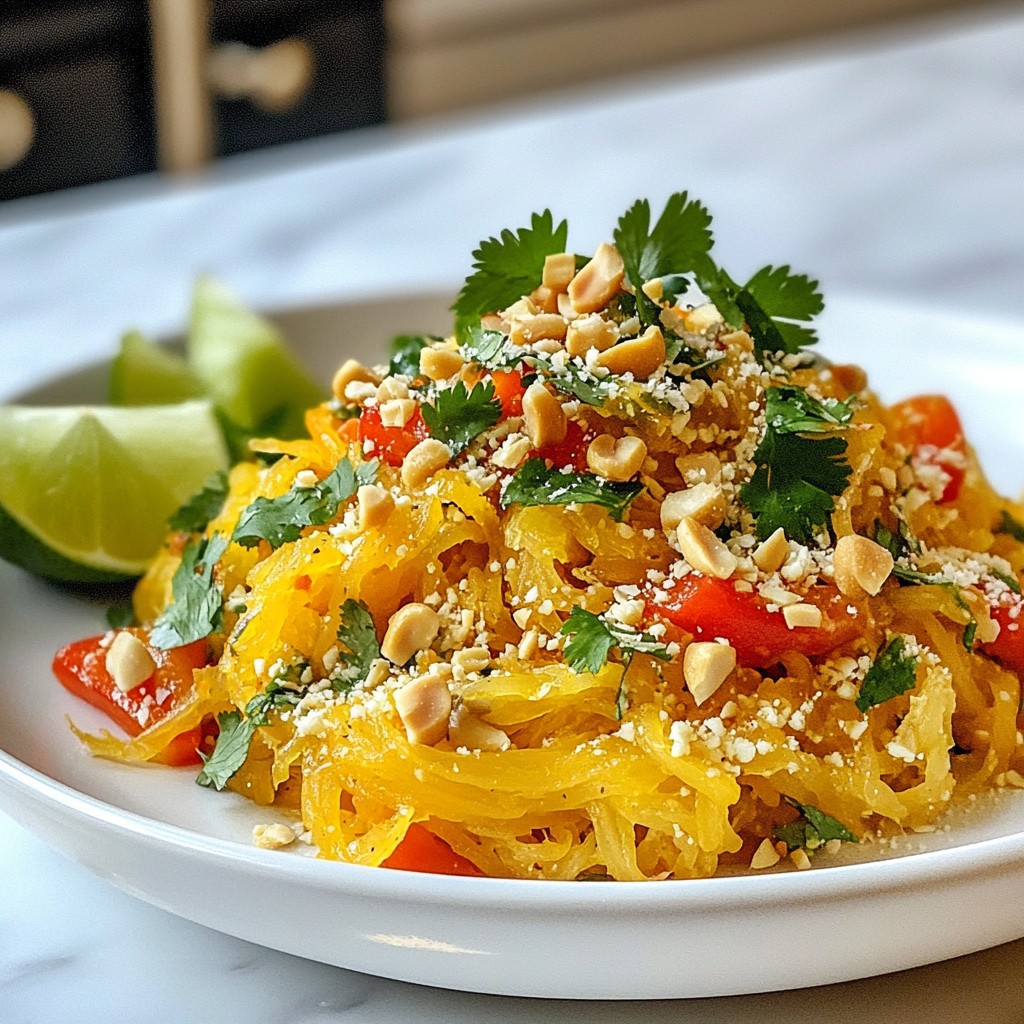
Are you ready to enjoy a tasty twist on a classic dish? This Spaghetti Squash Pad Thai recipe is not just simple; it’s packed with flavor! You can create a great meal that feels light yet satisfying. In this post, I'll share easy steps, tips, and ingredient swaps to make your cooking fun and stress-free. Let’s dive into this delicious and healthy recipe together!
Why I Love This Recipe
- Healthy Alternative: This Pad Thai replaces traditional noodles with spaghetti squash, making it a lighter, low-carb option without sacrificing flavor.
- Quick to Prepare: With a total time of just 55 minutes, this dish is perfect for a weeknight dinner that impresses without the stress.
- Flavorful and Versatile: The combination of tamarind, soy sauce, and fresh vegetables creates a deliciously complex flavor profile that can be customized to your liking.
- Great for Meal Prep: This dish stores well, making it an excellent choice for meal prepping your lunches or dinners for the week ahead.
Ingredients
Main Ingredients
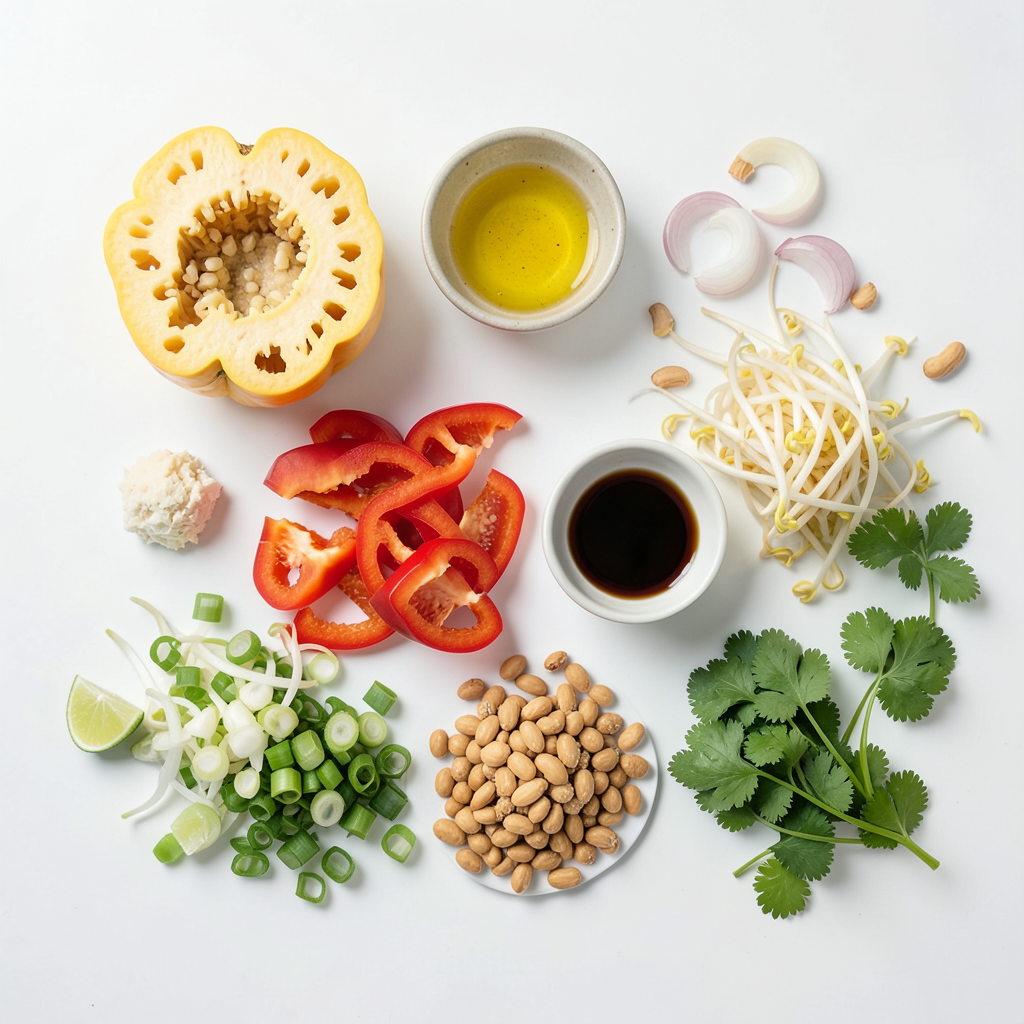
- 1 medium spaghetti squash
- 2 tablespoons peanut oil (or vegetable oil)
- 2 cloves garlic, finely minced
- 1 small onion, thinly sliced
- 1 red bell pepper, thinly sliced
- 1 cup fresh bean sprouts
- 2 green onions, chopped into small pieces
- 3 tablespoons tamarind paste
- 2 tablespoons soy sauce
- 1 tablespoon brown sugar
- 2 eggs, lightly beaten (optional for non-vegans)
- 1/4 cup roasted peanuts, crushed for topping
- Lime wedges for serving
- Fresh cilantro leaves for garnish
Optional Ingredients
- Extra vegetables like carrots or snow peas
- Protein options like shrimp or chicken
- Sriracha for a spicy kick
Kitchen Tools Needed
- A large baking sheet
- A sharp knife
- A spoon for scooping seeds
- A large skillet or wok
- A fork for shredding the squash
- Measuring spoons and cups
- A cutting board
Step-by-Step Instructions
Preparing the Spaghetti Squash
First, preheat your oven to 400°F (200°C). This step helps the squash roast evenly. Next, take your medium spaghetti squash and slice it in half lengthwise. Be careful! Use a sturdy knife. Scoop out the seeds with a spoon. Make sure to remove all the seeds. Place the squash halves cut side down on a baking sheet lined with parchment paper. Roast in the oven for about 30-35 minutes. The squash should become tender and easy to shred with a fork.
Cooking the Vegetables
While the squash roasts, heat 2 tablespoons of peanut oil in a large skillet or wok over medium-high heat. When the oil shimmers, add 2 cloves of minced garlic and 1 small sliced onion. Sauté for 2-3 minutes. The garlic will smell great, and the onion will become translucent. Then, add 1 thinly sliced red bell pepper. Keep sautéing for an additional 3-4 minutes. You want the peppers to be tender but still crisp. Now, toss in 1 cup of fresh bean sprouts and 2 chopped green onions. Stir everything well. Next, add 3 tablespoons of tamarind paste, 2 tablespoons of soy sauce, and 1 tablespoon of brown sugar. Cook for 2 minutes, stirring often. This helps mix all the flavors.
Combining Ingredients and Serving
If you want eggs in your dish, push the vegetable mix to one side of the skillet. Pour in 2 beaten eggs on the empty side. Let them cook for one minute, then scramble until fully cooked. Combine the eggs with the veggies. Once the spaghetti squash is done roasting, take it out of the oven. Use a fork to scrape the flesh into long strands. Add these strands to the skillet with the veggies. Toss everything together well. To finish, let the dish cook for another 3-5 minutes. This melds the flavors. Serve your Spaghetti Squash Pad Thai hot. Sprinkle crushed peanuts on top and add lime wedges and fresh cilantro leaves for extra flavor. Enjoy!
Tips & Tricks
How to Choose the Perfect Spaghetti Squash
Choosing the right spaghetti squash is key. Look for a squash that feels heavy and firm. The skin should be a bright yellow color without soft spots or blemishes. A good squash will have a smooth surface and sound hollow when you tap it. This means it is ripe and ready for cooking.
Cooking Methods for Spaghetti Squash
You can cook spaghetti squash in several ways. The most common method is roasting. This method brings out its natural sweetness. To roast, cut the squash in half and scoop out the seeds. Place it cut side down on a baking sheet, and roast at 400°F for 30-35 minutes.
You can also microwave it for a quicker option. Cut the squash in half, place it in a dish, and add a little water. Cover it with plastic wrap and microwave for about 10-12 minutes.
Another method is to steam the squash. This keeps it moist and tender. Simply place the squash in a steamer basket over boiling water. Cook for about 15-20 minutes until soft.
Flavor Boosting Tips
To enhance flavors in your spaghetti squash Pad Thai, consider these tips:
- Use Fresh Ingredients: Fresh garlic, onions, and peppers make a big difference.
- Add Citrus: A squeeze of lime adds brightness to the dish.
- Experiment with Sauces: Tamari can be a great substitute for soy sauce.
- Spice it Up: If you like heat, add a pinch of chili flakes or sriracha.
- Garnish Generously: Use crushed peanuts and fresh cilantro for added texture and taste.
These small tweaks can turn a good dish into a great one! Enjoy your cooking!
Pro Tips
- Choose a Ripe Squash: Make sure to select a spaghetti squash that is firm and has a uniform yellow color. Avoid any with soft spots or blemishes for the best flavor and texture.
- Customize Your Veggies: Feel free to add or substitute other vegetables like carrots, snap peas, or broccoli to suit your taste or to use up ingredients you have on hand.
- Make It Spicy: If you enjoy heat, consider adding some red pepper flakes or sliced fresh chili to the vegetable mixture for an extra kick.
- Perfectly Scrambled Eggs: For fluffier scrambled eggs, whisk them with a splash of water or milk before adding them to the skillet. This will create a lighter texture.
Variations
Vegetarian and Vegan Options
You can easily make this dish vegetarian or vegan. Simply skip the eggs. The rest of the recipe is already plant-based. Use tofu instead of eggs if you want protein. Just add it to the skillet with the vegetables. It will soak up all the flavors.
Gluten-Free Alternatives
This Spaghetti Squash Pad Thai is naturally gluten-free. The key is using tamari instead of soy sauce. Tamari is a gluten-free soy sauce. It keeps the dish tasty without any gluten. Always check labels to ensure your ingredients are gluten-free.
Protein Additions (Shrimp, Chicken, etc.)
For more protein, add shrimp or chicken. Cook shrimp until pink and fully cooked. For chicken, use cooked, shredded meat. Add it to the skillet when you mix in the spaghetti squash. You can also use cooked tofu or tempeh for a plant-based protein boost.
Storage Info
How to Store Leftovers
To keep your Spaghetti Squash Pad Thai fresh, store it in an airtight container. Let the dish cool to room temperature first. Then, place it in the fridge. It will stay good for up to four days. Make sure to keep any toppings, like peanuts or cilantro, separate until you serve it again.
Reheating Instructions
When you’re ready to enjoy your leftovers, reheat them on the stove for the best taste. Use a pan over medium heat. Add a splash of water or oil to help it heat evenly. Stir often for about five minutes or until hot. You can also microwave it in a bowl. Cover it with a lid or a damp paper towel to prevent drying out. Heat for one to two minutes, stirring halfway through.
Freezing Tips
If you want to save some for later, you can freeze Spaghetti Squash Pad Thai. Place it in a freezer-safe container. Make sure to remove as much air as possible. It will last up to three months in the freezer. When you are ready to eat it, thaw it overnight in the fridge. Then, reheat it as described above. Freezing may change the texture a little, but the flavor will still be great!
FAQs
Can I make this recipe without eggs?
Yes, you can make this recipe without eggs. Just skip the step that includes the eggs. The dish will still taste great without them. You can add more veggies or tofu for extra texture and protein.
What can I substitute for tamarind paste?
If you don't have tamarind paste, you can use lime juice and brown sugar. Mix one tablespoon of lime juice with one tablespoon of brown sugar. This mix gives a similar sweet and tangy flavor. Another option is to use soy sauce with a bit of vinegar for a different taste.
How do I know when spaghetti squash is cooked?
You know spaghetti squash is cooked when it’s tender. Poke it with a fork. If it easily pierces the skin, it’s ready. The flesh should scrape into long strands easily. This usually takes about 30-35 minutes in the oven.
This blog post covered how to cook spaghetti squash with ease. We explored key ingredients, from main to optional ones, and the essential kitchen tools. The step-by-step process showed you how to prepare and combine everything for a delicious dish. I shared helpful tips to select the best squash and offered flavor ideas. You learned about tasty variations, storage tips, and answers to common questions. Spaghetti squash is versatile and delicious. Use this guide to enjoy cooking it in new ways.