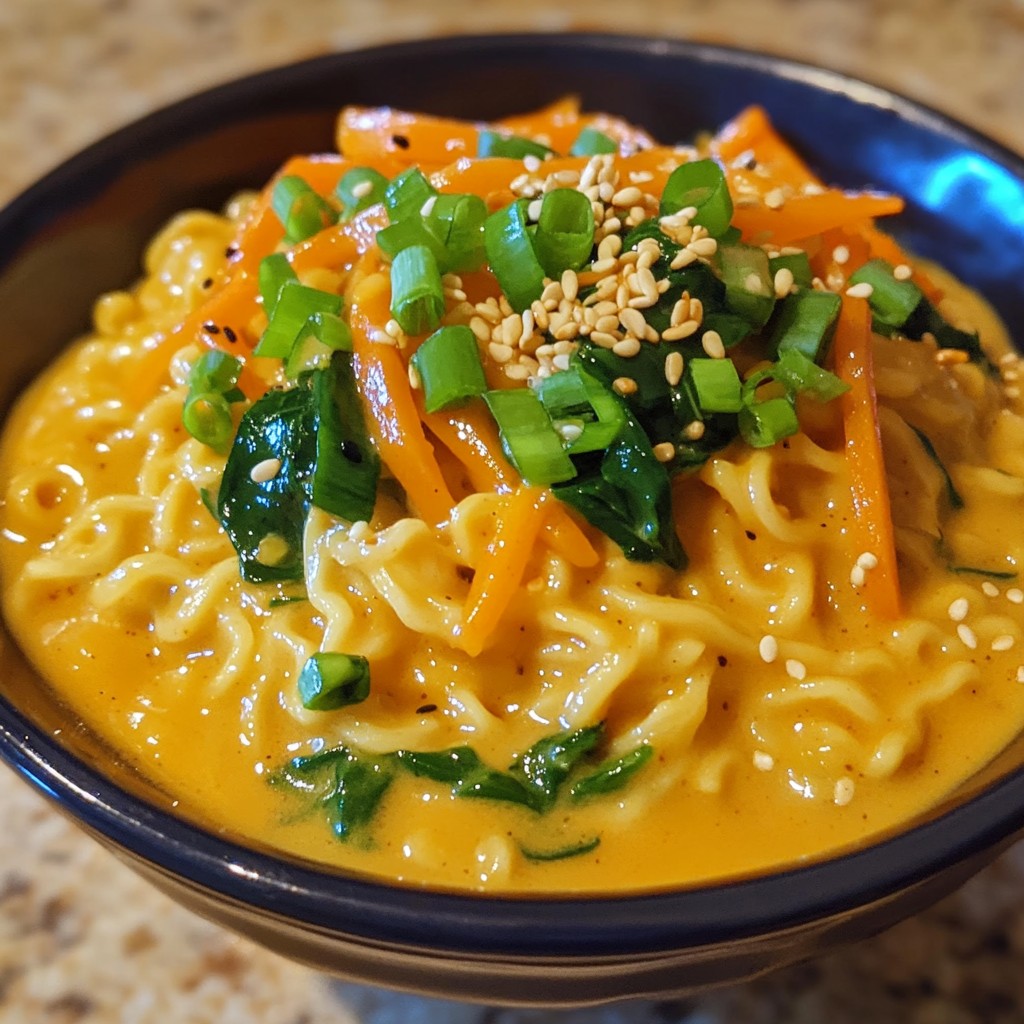
Looking for a quick and tasty meal? I have just the recipe for you: Spicy Peanut Butter Ramen! This dish combines rich flavors with a spicy kick that you’ll love. With simple ingredients and easy steps, you can serve up a bowl in no time. Get ready to impress your taste buds. Let’s dive into the ingredients and get cooking!
Why I Love This Recipe
- Quick and Easy: This recipe is perfect for busy weeknights, taking just 20 minutes from start to finish.
- Flavor Explosion: The combination of spicy sriracha and creamy peanut butter creates a deliciously bold flavor that’s hard to resist.
- Healthy Ingredients: Packed with fresh vegetables like spinach and carrots, this dish is both nourishing and satisfying.
- Customizable: Adjust the spice level to your liking and add your favorite veggies for a personal touch!
Ingredients
Main Ingredients
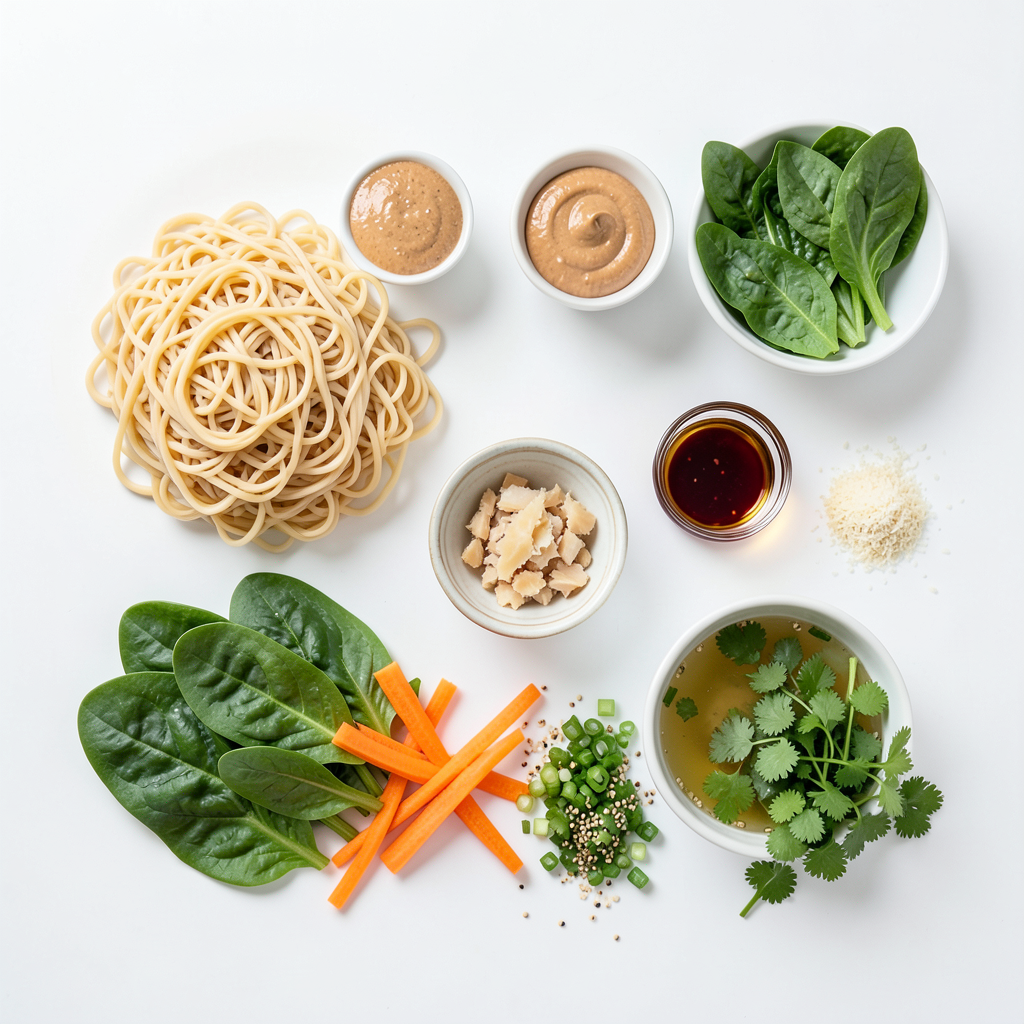
To make Spicy Peanut Butter Ramen, gather these key items:
- 200g ramen noodles
- 2 tablespoons smooth peanut butter
- 1 tablespoon soy sauce
- 1 tablespoon toasted sesame oil
- 1 tablespoon sriracha sauce (adjust to taste)
- 1 teaspoon freshly grated ginger
- 1 garlic clove, finely minced
- 2 cups vegetable broth
- 1 cup fresh spinach, roughly chopped
- 1 medium carrot, julienned
- 2 green onions, sliced
These ingredients work together to create a creamy, spicy sauce that coats the ramen.
Optional Garnishes
For added flavor and a pop of color, consider these garnishes:
- 1 tablespoon sesame seeds (for garnish)
- Fresh cilantro leaves (for garnish, optional)
These toppings enhance the dish's look and taste, giving it a fresh finish.
Substitutions for Key Ingredients
If you need to swap some items, here are good options:
- Use whole wheat noodles or rice noodles instead of ramen noodles.
- Swap smooth peanut butter for crunchy peanut butter for texture.
- Replace vegetable broth with chicken broth for a richer flavor.
- For a nut-free option, try sunbutter or tahini instead of peanut butter.
These substitutions help you customize the dish while keeping it tasty and satisfying.
Step-by-Step Instructions
Cooking Ramen Noodles
To cook the ramen noodles, bring a large pot of water to a boil. Add 200 grams of ramen noodles to the pot. Cook them according to the package directions. Once tender, drain the noodles and set them aside.
Preparing the Spicy Peanut Butter Sauce
Grab a medium saucepan and warm 1 tablespoon of toasted sesame oil over medium heat. Add 1 minced garlic clove and 1 teaspoon of freshly grated ginger. Sauté for about 1 minute until fragrant. Now, pour in 2 cups of vegetable broth. Add 2 tablespoons of smooth peanut butter, 1 tablespoon of soy sauce, and 1 tablespoon of sriracha sauce. Use a whisk to mix everything until smooth and creamy.
Combining Ingredients
Next, add 1 julienned carrot and 1 cup of roughly chopped spinach to the saucepan. Cook for 3 to 4 minutes until the vegetables are bright and tender. Now, gently fold in the cooked ramen noodles. Stir well to coat the noodles with the spicy peanut butter sauce. Heat everything through for another 2 minutes. Serve the ramen in bowls and garnish with sliced green onions, sesame seeds, and fresh cilantro.
Tips & Tricks
Perfecting the Peanut Butter Sauce
To make the sauce creamy, use smooth peanut butter. Mix it well with the broth. Start with a low heat to avoid burning the garlic and ginger. Stir often while cooking. This keeps the sauce smooth and tasty. Don't rush this step; give it time to blend.
Adjusting Spice Levels
If you want more heat, add extra sriracha. Start with one tablespoon, then taste. You can always add more, but you can't take it out. If it gets too spicy, add a bit more peanut butter or broth. This helps balance the heat and makes the dish milder.
Best Cooking Techniques for Noodles
Cook ramen noodles in boiling water, just like the package says. Don't overcook them; they should be al dente. Drain them well, but don't rinse. Rinsing washes away the starch that helps the sauce stick. Mix noodles with the sauce gently, ensuring every strand gets coated.
Pro Tips
- Adjust the Heat: If you prefer a milder dish, start with less sriracha and gradually add more to taste. This allows you to control the spice level without overwhelming the other flavors.
- Ingredient Substitutions: Feel free to swap out the spinach for other greens like kale or bok choy. You can also use almond butter instead of peanut butter for a different flavor profile.
- Enhance the Umami: Add a splash of rice vinegar or a teaspoon of miso paste to the broth for an extra layer of umami flavor. This will elevate the dish and make it even more delicious.
- Make it a Meal: To make this dish heartier, add cooked protein such as shredded chicken, tofu, or edamame. This will turn your ramen into a complete meal that’s satisfying and nutritious.
Variations
Adding Protein (Chicken, Tofu, etc.)
You can add protein to make this dish heartier. Chicken, tofu, or shrimp work well. If you choose chicken, cook it first. Slice it thin before adding to the ramen. For tofu, use firm tofu and cube it. Pan-fry it until golden brown for extra flavor. Shrimp cooks quickly, so add it to the broth for just a few minutes. Each protein gives a unique taste and texture.
Vegetable Alternatives
Feel free to swap out the vegetables in your ramen. Broccoli, bell peppers, or snap peas are great choices. Slice the broccoli into small pieces and add it with the carrots. Bell peppers can add a nice crunch. Snap peas add sweetness and color. Use whatever you have on hand. Mixing different veggies keeps it fresh and exciting.
Different Flavor Profiles (Coconut, Lime, etc.)
You can change the flavor of the broth easily. For a tropical twist, add coconut milk. This gives a creamy, rich taste. Lime juice can add brightness and zing. Squeeze in fresh lime juice just before serving. You might also try adding fresh herbs, like basil or mint, for a fresh kick. Each twist creates a new dish and keeps things fun!
Storage Info
Refrigeration Guidelines
Store any leftover Spicy Peanut Butter Ramen in an airtight container. Place it in the fridge within two hours of cooking. It will last for up to three days. The noodles will soak up some sauce, but this is normal. Just give it a good stir before eating.
Reheating Instructions
To reheat, use a microwave or a stovetop. If using a microwave, place the ramen in a bowl. Add a splash of water to keep it moist. Cover it and heat for about 1-2 minutes. Stir halfway through to ensure even heating. On the stovetop, warm it in a pan over medium heat. Stir often and add a little broth if it seems dry.
Freezing the Dish
You can freeze Spicy Peanut Butter Ramen, but it's best to freeze the sauce and noodles separately. This keeps the noodles from getting mushy. Store the sauce in a freezer-safe container for up to three months. The cooked noodles can also freeze for about a month. When ready to eat, thaw the sauce in the fridge overnight and reheat as described above. Cook fresh noodles when you're ready to enjoy.
FAQs
How spicy is Spicy Peanut Butter Ramen?
The spice level depends on the amount of sriracha you add. If you like heat, use more sriracha. You can start with one tablespoon, then taste and add more if you want. The creamy peanut butter balances the heat, making it enjoyable for most.
Can I make it vegan?
Yes, you can easily make this dish vegan. Just ensure that the soy sauce is vegan-friendly. The other ingredients like peanut butter, vegetable broth, and all the veggies are already vegan. This dish remains delicious without any animal products.
What can I serve with Spicy Peanut Butter Ramen?
You can serve this ramen with a fresh salad or some crispy tofu. For a heartier meal, add grilled chicken or shrimp. You can also pair it with steamed vegetables for more color and nutrients.
How long does it take to make Spicy Peanut Butter Ramen?
This dish takes about 20 minutes to make. You will spend 10 minutes prepping and cooking the noodles and sauce. The quick cooking time makes it a great option for busy weeknights. You can enjoy a tasty meal in no time.
In this article, we explored how to make Spicy Peanut Butter Ramen. We covered the key ingredients and optional garnishes that can elevate your dish. I shared step-by-step instructions for cooking, plus tips to perfect your sauce and noodles. You learned about variations with protein and veggies to suit your taste. Lastly, we discussed proper storage to keep leftovers fresh.
Enjoy making this dish your own. Experiment with flavors and make it a staple!